
Hounds of Marrow County Dogs Tier List by Role
Evaluate personalities and traits in-game—no fake breed names or invented stats.
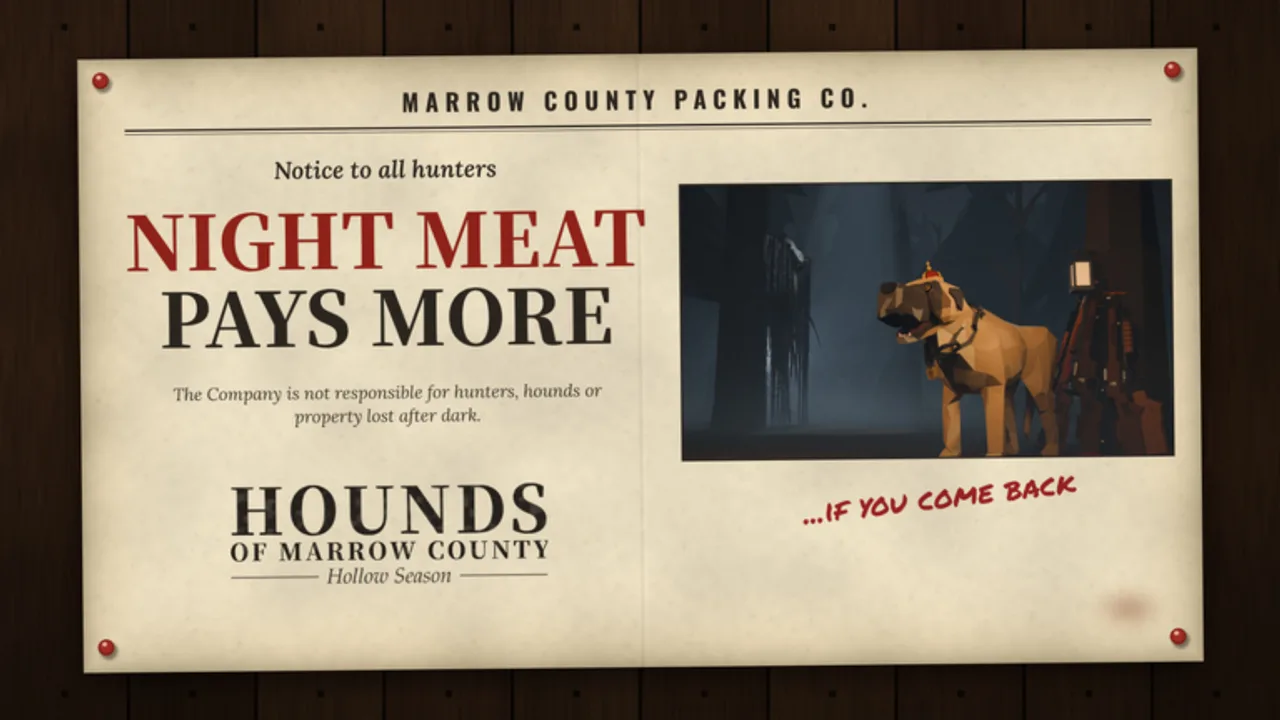
Your mutt is not a cosmetic. In Hounds of Marrow County, the store page is clear: you start the journey with a dog by your side, and Alpha content already includes 40+ different dogs with different personalities and traits that assist hunts through the haunted Appalachian forest. This tier list ranks roles, not fabricated breed ladders. If a chart online lists exact damage numbers or unpublished rare breeds, treat it as unverified until you can see those fields yourself.
Creator pileofsheep is still iterating on Alpha V1.7 / 1.73. Traits can shift, new companions can appear, and seasonal cosmetics can distract you from the companion that actually finds animals. Read this page as a field manual: pick a role, test it on a size-16 co-op server, then promote or demote based on Marks earned and deaths avoided.
For how companions behave on the trail, pair this list with the dogs companions guide. For weapons that match your dog’s tempo, jump to the guns tier list. New hunters should also skim Getting Started before spending early Marks.
Ranking philosophy for dog roles
We use three primary roles and one situational lane:
| Role | What “high tier” means here | Best session goals |
|---|---|---|
| Tracking | Finds and follows animals reliably so you waste less time and ammo | Daytime pelt runs, learning animal routes |
| Combat assist | Helps when fights go loud—wildlife panic, gnome aggression, messy co-op | Night loops, gnome farming, contested brush |
| Beginner-friendly | Forgiving, readable, and useful before you understand every trait | First hours, teaching friends, low-stress co-op |
| Situational specialty | Strong only for a narrow job (for example trophy focus or loud distraction) | Short experiments, not your only dog |
S-tier in this system means “take this role first for the stated goal.” A-tier means “excellent once you know the map.” B-tier means “fine filler while you save Marks.” We deliberately avoid F-tier shaming of companions you have not tested—Alpha data is incomplete.
Tracking role tiers
S — Dedicated trackers for quiet economy runs. Prefer dogs whose in-game personality text and trait tooltips emphasize scent, finding, or staying on animals. On a clean day hunt you want fewer empty walks between skinnable kills. A great tracker turns the forest into a checklist: locate, close distance, take the shot your gun playstyle can finish, skin, sell, repeat.
A — Balanced trackers that still help in light fights. Many companions will not be pure bloodhounds. If a dog finds animals and still reacts when something charges, it climbs this lane for mixed sessions.
B — Soft trackers that need player skill to shine. If the dog only occasionally points you toward wildlife, keep it while you learn, then replace it when Marks allow.
Evaluation checklist (tracking):
- Does the dog reduce time between meaningful animal contacts?
- Can you still hear or see its cues in dense trees?
- Does it pull you into bad night angles, or does it keep lanes readable?
- After ten animals, did your Marks-per-minute rise versus hunting alone?
If the answer to (4) is no, demote the companion for economy work even if it looks cool at the Lodge.
Combat assist role tiers
Night in Marrow County is not a free pass. Official copy notes that night does not tax you the same way day does, but it is not just animals out after dusk. Gnomes escalate when broken: they remember you, charge with varied weaponry, and pay about 1,400 Marks each—a sizable day’s pay if you survive the revenge spiral.
S — Assist dogs for gnome and panic fights. Look for traits that imply aggression support, staying close, or drawing pressure off your reload windows. High tier here is “you reload and reposition while the dog buys seconds,” not “the dog solos the county.”
A — Reliable bark-and-harass companions. Useful when co-op teammates create noise and wildlife scatters into your lane.
B — Passive companions in loud content. Fine for daytime, risky as your only partner when you intentionally break gnomes.
Evaluation checklist (combat assist):
- During a bad fight, did the dog change the outcome or only add chaos?
- Can you call it off or re-position without losing the animal you meant to skin?
- After a gnome break, did the dog help you extract to the Lodge waypoint?
- In a full server, does the dog still behave, or does pathing fall apart?
Combat tier rises when the dog saves a kit worth more than the Marks you spent on the companion.
Beginner-friendly role tiers
New players die to confusion more than to “bad RNG.” Beginner-friendly dogs are high tier when they teach the loop: hunt, skin, sell, return to a customized Lodge, set a waypoint, and show trophies without constant micromanagement.
S — Clear, stable starters. Personality text is understandable, traits do something obvious within the first session, and the dog does not yank you into every bush fight.
A — Slightly specialized but still readable. Good once you finish orientation and want a lean toward tracking or assist.
B — High-maintenance personalities. Save these until you can read the forest and manage ammo.
Beginner checklist:
- Can a friend explain the dog’s job in one sentence?
- Does the dog work with a mid-range gun while you learn aim?
- Are you earning Marks without rage-quitting night content?
- Is the Lodge waypoint habit forming, or are you still corpse-running?
If you are still learning controls and the Marks shop, stay in this lane. Prestige hunting can wait.
How to evaluate traits in-game (without a datamine)
Because this wiki will not invent stats, use a repeatable field test every time Alpha updates:
- Read every trait tooltip twice. Note verbs: find, track, fight, guard, fetch-style language, stamina-like wording—whatever the client actually shows.
- Run a timed day circuit. Fifteen minutes, same route, same gun class. Count animal contacts and successful skins.
- Run a controlled night sample. One gnome break or one dusk loop—not a suicide stack. Record whether the dog helped extraction.
- Compare Marks. Banked Marks and kept gear beat highlight clips.
- Re-test after patches. When the Roblox description flips from 1.73 to a new label, repeat steps 2–4 before you rewrite your personal tier note.
Also watch personality separate from raw power. A dog that is “brave” on paper but constantly breaks stealth can demote itself on tracking ladders. A cautious dog might look low tier in gnome chaos and still be S-tier for teaching a new co-op partner.
Pairing dogs with guns and session plans
Dogs do not exist in a vacuum. Close-range gun players often want combat-assist companions that buy reload time in brush. Long-range players often want trackers that create shooting lanes without forcing melee brawls. Mid-range generalists can flex either way. Use the guns tier list to match distances, and the hunting and skinning guide to turn the pairing into Marks.
Suggested planning order:
- Pick today’s goal (pelts, gnomes, trophies, teaching).
- Pick the dog role from this page.
- Pick a gun playstyle that covers the distances that role creates.
- Set Lodge waypoint before you push deep forest.
- Review Updates Hub if a seasonal crate or Alpha note might change incentives.
Common ranking mistakes
- Chasing cosmetics over traits. Halloween crates and All Hallow’s rewards are fun; they do not automatically make a dog high tier. See Halloween cosmetics.
- One dog for every job. Alpha gives you a large roster for a reason. Swap roles when the session goal changes.
- Ignoring co-op noise. On busy servers, tracking value can fall while assist value rises.
- Trusting invented breed charts. If a list cannot point to an in-game trait screen, it is entertainment, not a guide.
Keep your personal meta notebook
Until pileofsheep publishes denser patch notes, your notes are the best tier list. Record dog name as shown in-game, role guess, Marks-per-hour, deaths, and patch label (for example Alpha 1.73). Bring those notes back when you re-read this page. For the wider ranking philosophy, return to the Tier List Hub. For companion systems detail, open the dogs companions guide. For weapon pairing, stay synced with the guns tier list.
A good dog in Marrow County is the one that gets you home with pelts, Marks, and a story—not the one a stranger ranked without opening the trait panel.
Frequently Asked Questions
Quick answers for hunters in Marrow County.
Why does this list avoid naming specific breeds as S-tier?
Public Alpha copy confirms 40+ dogs with personalities and traits, but not a verified public breed ladder with stats. Ranking invented names would mislead players.
What should beginners prioritize in a dog?
Readable traits, stable behavior, and help finishing the hunt–skin–sell loop. See the beginner-friendly section and the dogs companions guide.
Are combat dogs better than trackers at night?
Often yes if you expect gnomes or loud co-op fights. Trackers still win quiet economy loops. Match the role to the session, then verify in-game.
How do I know a dog is worth its Marks?
Time a day circuit and a careful night sample, then compare banked Marks and kept gear against hunting with your previous companion.
Where should I go after picking a dog role?
Pair it with the guns tier list and practical steps in Getting Started or the hunting guide.